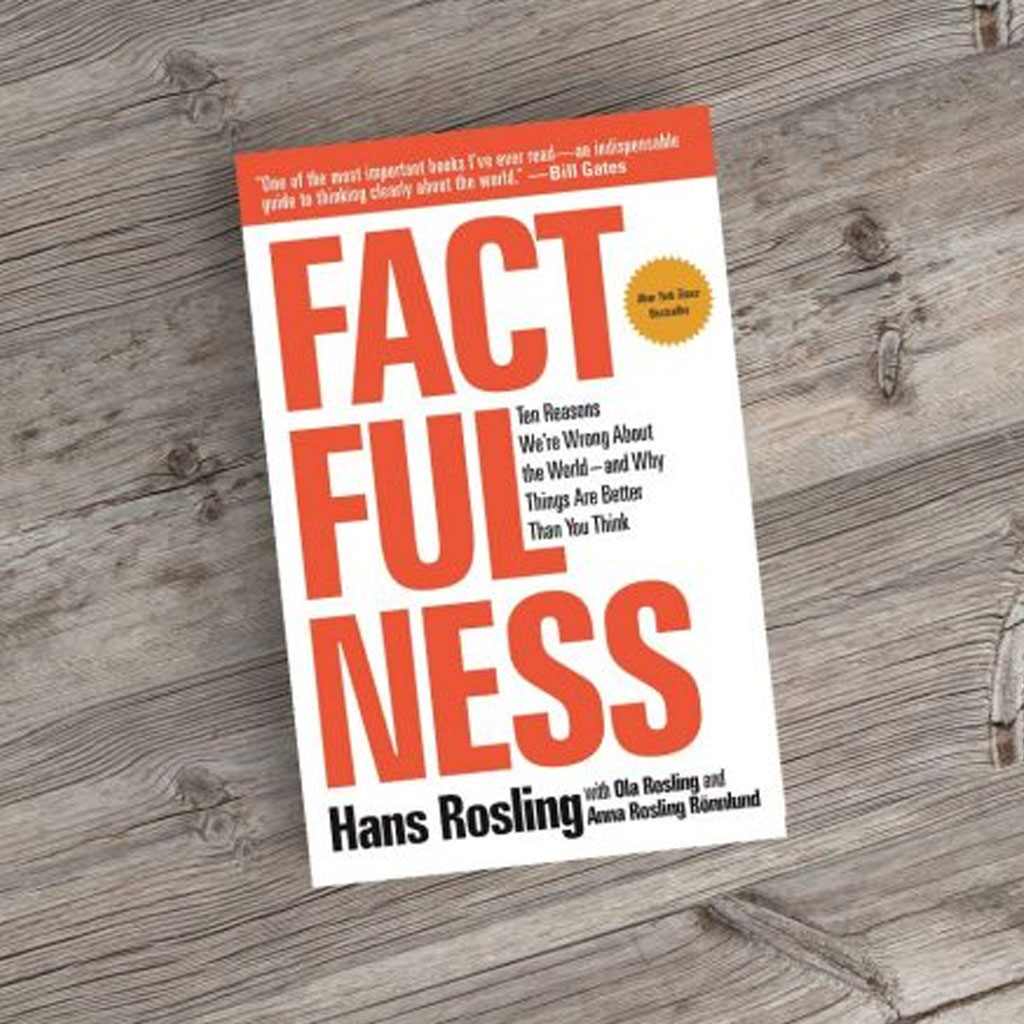
In a world inundated with information, the allure of statistics is undeniable. They shape narratives, influence policies, and mold perceptions. Yet, how often do we stop to question the accuracy and relevance of these statistical claims? In his thought-provoking book, Factfulness, the late Hans Rosling, along with his co-authors Ola Rosling and Anna Rosling Rönnlund, embarks on a journey to debunk misconceptions and promote a more nuanced understanding of global trends through the lens of data.
As a Ph.D. student delving deep into quantitative statistics, I approached Factfulness with a keen eye for its treatment of data and its implications. What I found was not just a book on statistics but a manifesto for critical thinking in an age of information overload.
One of the most striking revelations in Factfulness is the idea of the “negativity instinct” – our innate tendency to focus on the negative aspects of the world while overlooking the progress that has been made. Through a series of engaging anecdotes and compelling statistics, Rosling dismantles the pervasive myths of doom and gloom that pervade our collective consciousness. From misconceptions about poverty and population growth to misconstrued notions about health and education, Rosling meticulously dissects each fallacy with the precision of a surgeon.
What struck me as particularly relevant, both in my academic pursuits and in everyday life, is Rosling’s emphasis on the importance of updating our mental software. As a Ph.D. student, I am constantly confronted with the challenge of staying abreast of the latest research and methodologies. Similarly, in the realm of statistics, outdated or misleading data can easily perpetuate false narratives in media and education. Rosling’s call to embrace a fact-based worldview serves as a powerful reminder of the responsibility we bear in interpreting and disseminating information accurately.
Moreover, Factfulness underscores the transformative power of data visualization in elucidating complex trends and patterns. As a student immersed in the world of quantitative analysis, I am acutely aware of the significance of visual representations in conveying information effectively. Rosling’s use of Gapminder, a tool for visualizing global data, not only enhances the accessibility of his arguments but also empowers readers to interrogate the veracity of statistical claims for themselves.
However, Factfulness is not without its limitations. While Rosling’s optimism is undeniably infectious, some critics argue that his relentless focus on progress may overshadow persistent inequalities and systemic injustices.
In conclusion, Factfulness is a compelling testament to the power of statistics in challenging misconceptions and reshaping narratives. I found Rosling’s insights both illuminating and thought-provoking. By urging readers to embrace a fact-based worldview and to interrogate the prevailing narratives with skepticism, Factfulness offers a roadmap for navigating the tumultuous seas of information in the digital age.
In a world where statistics can be wielded as weapons of persuasion or tools of enlightenment, we are reminded of the profound responsibility we bear in discerning fact from fiction and in striving for a more nuanced understanding of the world around us.

 Meadows Cozy Corner
Leave a comment