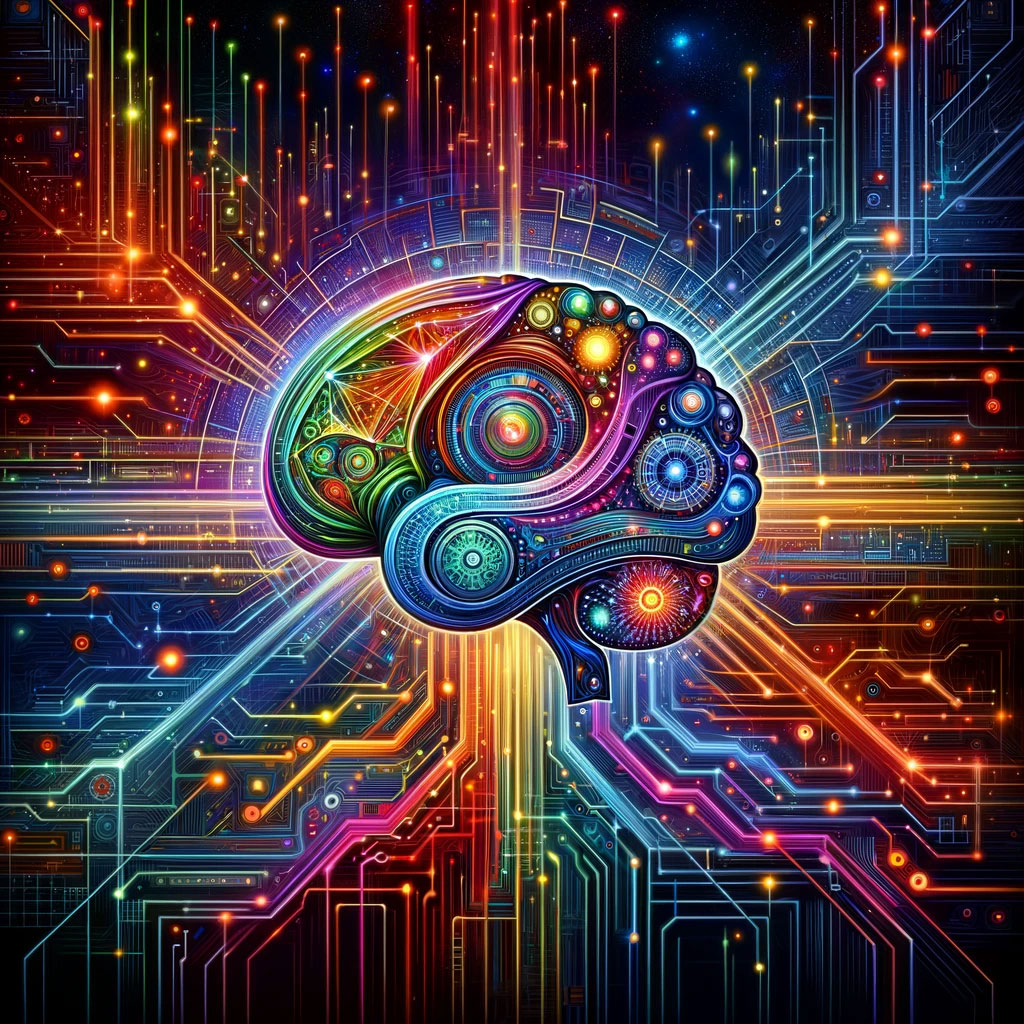
Welcome back to our ongoing series where we explore the fascinating world of Artificial Intelligence (AI). Having journeyed through the basics of AI, the intricacies of machine learning, the foundational role of algorithms, and the marvel of neural networks, we now delve into one of the most transformative technologies in AI: Deep Learning. In this post, we aim to demystify deep learning in simple terms, showing how it ties together everything we’ve discussed so far.
Deep Learning Demystified
Deep Learning is a subset of Machine Learning, which in turn falls under the broad umbrella of AI. If AI is the goal of creating intelligent machines, and machine learning is the method of teaching them to learn from data, then deep learning is the cutting-edge technique that makes complex learning possible. At its core, deep learning utilizes advanced neural networks with multiple layers (hence the term “deep”) to process data in sophisticated ways.
Neural Networks: The Foundation
Remember our discussion on neural networks? These are the structures inspired by the human brain, designed to process information in a manner similar to how we think and learn. Deep learning takes this concept to the next level by stacking these neural networks in layers. Each layer can learn different aspects of the data it’s fed, making the process of understanding complex data like images, sounds, and texts far more effective than traditional machine learning methods.
The Role of Algorithms
Algorithms, which we described as complex algebraic expressions, play a crucial role in deep learning. They dictate how data is passed through these layers and adjusted based on the learning the network undergoes. Through algorithms, a deep learning model can refine its understanding, improve its accuracy, and make decisions with minimal human intervention.
Deep Learning in Action
Deep learning powers many applications you likely use every day. Let’s tie in some examples:
Voice Recognition: Systems like Siri and Google Assistant understand your queries thanks to deep learning, which helps them process natural language and respond appropriately.
Image Recognition: Facebook’s ability to tag your friends in photos is powered by deep learning algorithms that recognize faces even in varied lighting and positions.
Recommendation Systems: Netflix and Amazon recommend movies and products based on your past interactions. Deep learning analyzes your preferences to predict what you might like next.
Connecting Deep Learning with Computer Vision
Our exploration of computer vision highlighted how machines can “see” and interpret visual information. Deep learning is crucial here, enabling computers to recognize patterns in images and videos much like the human eye does, but at a scale and speed unmatched by humans. This capability is revolutionizing fields from autonomous driving to medical imaging, where machines can identify diseases from scans with incredible accuracy.
Conclusion
Deep learning represents a significant leap forward in the quest to create machines that can learn and think like humans. By leveraging the power of neural networks and sophisticated algorithms, deep learning enables machines to process and understand complex data in ways we never thought possible. As we continue this series, we’ll dive deeper into the applications of deep learning and how it’s shaping the future of AI.
Stay tuned as we unravel more mysteries of AI, making the world of technology easier for everyone to understand and appreciate.

 Meadows Cozy Corner
Leave a comment