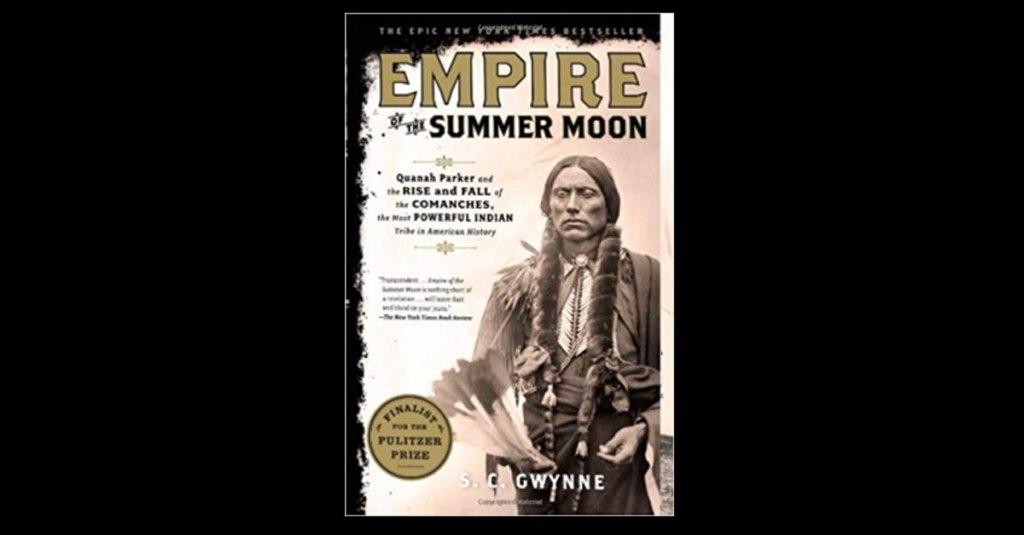
“Empire of the Summer Moon” by S. C. Gwynne stands as a riveting exploration of the clash of cultures that defined the American West, offering a rich tapestry of historical accounts, vivid characters, and nuanced perspectives. As a companion to Lucia St. Clair Robson’s “Ride the Wind,” this non-fiction masterpiece provides a deeper understanding of the complex dynamics at play during this transformative period in American history.
Central to Gwynne’s narrative is the figure of Quanah Parker, the son of Cynthia Ann Parker, whose abduction by the Comanche tribe is at the heart of Robson’s novel. Through Gwynne’s meticulous research and vivid prose, Quanah emerges as a towering figure, embodying the resilience and adaptability of the Comanche people in the face of encroaching colonization. His journey from warrior to statesman offers a compelling counterpoint to his mother’s story, illuminating the ways in which individuals navigated the shifting landscapes of identity and allegiance.
Gwynne skillfully navigates through the annals of history, bringing to life pivotal battles such as the Battle of Plum Creek and the Battle of Adobe Walls. These clashes between Comanche warriors and settlers, Texas Rangers, and U.S. Army soldiers offer a visceral glimpse into the brutal realities of frontier warfare, where survival often depended on quick wits and even quicker trigger fingers.
Moreover, Gwynne vividly depicts the arduous journeys undertaken by both Native Americans and settlers across the rugged terrain of the western plains. The Great Raid of 1840, led by Comanche chief Buffalo Hump, serves as a harrowing example of the raids and counter-raids that characterized the struggle for control of the region. Similarly, the tragic story of the Parker family’s capture and captivity provides a poignant reminder of the human cost of these conflicts.
However, “Empire of the Summer Moon” is more than just a biography of Quanah Parker; it is a sprawling epic that encompasses a wide array of characters, each with their own stories to tell. From the legendary Comanche chief Quanah Parker to the infamous Texas Ranger Captain Sul Ross, Gwynne brings to life a cast of characters who played key roles in shaping the destiny of the American West. Through their eyes, we gain a multifaceted understanding of the conflicts and alliances that defined the era.
One of the book’s greatest strengths lies in its balanced portrayal of the conflicts between Native Americans and settlers. Gwynne deftly navigates the complexities of these interactions, offering insights into the motivations and perspectives of both sides. By presenting a nuanced view of history, he challenges readers to confront the myths and stereotypes that have long clouded our understanding of the American West.
As a companion to “Ride the Wind,” “Empire of the Summer Moon” enriches the reader’s appreciation for the themes of identity, resilience, and cultural assimilation. Through the lens of non-fiction, we gain a deeper understanding of the historical context in which Quanah Parker and his mother lived, fought, and ultimately shaped their legacies. Their stories serve as powerful reminders of the enduring human spirit and the capacity for resilience in the face of adversity.
In conclusion, “Empire of the Summer Moon” is a captivating and illuminating exploration of one of the most pivotal periods in American history. With its richly drawn characters, evocative prose, and nuanced perspective, it offers a compelling journey through the untamed landscapes of the American West. Whether you’re a fan of historical fiction or non-fiction, this book is sure to leave a lasting impression.

 Meadows Cozy Corner
Leave a comment