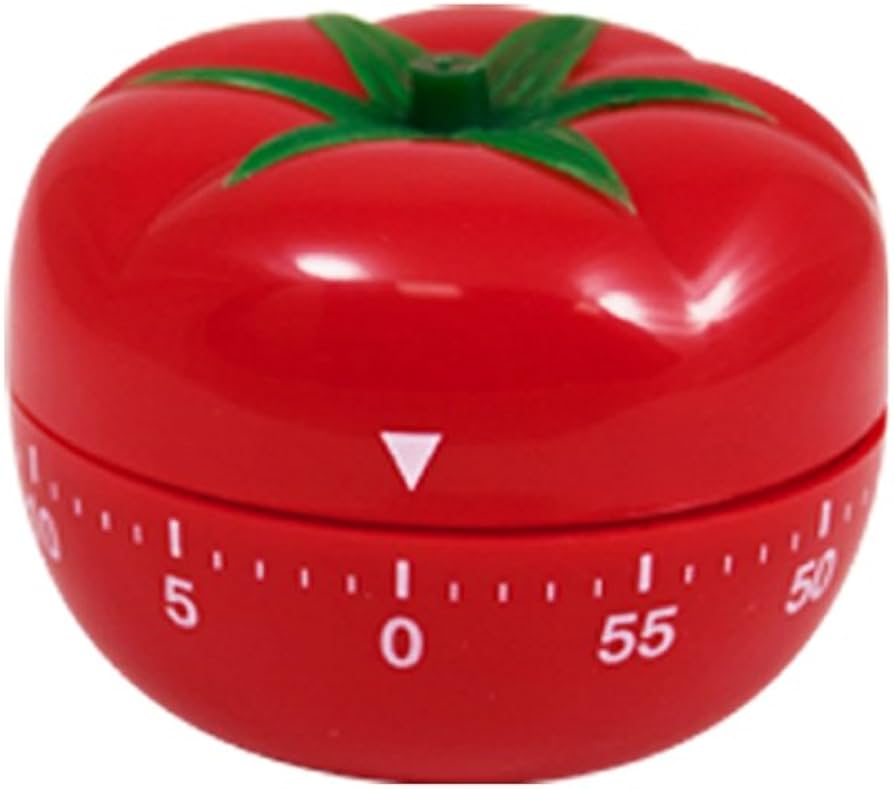
In one of my earlier posts published for the Productivity Challenge, I mentioned the Pomodoro technique. Since today’s challenge did not really involve anything I could post, I thought I would take a moment and explain this wonderful technique.
In today’s fast-paced world, maintaining focus and productivity can be challenging. Distractions abound, and the constant influx of information can make it difficult to stay on task. One technique that has gained widespread popularity for enhancing productivity is the Pomodoro Technique. Developed by Francesco Cirillo in the late 1980s, this time management method has proven to be effective in helping individuals break down work into manageable intervals, providing a structured approach to task completion.
Understanding the Pomodoro Technique
The Pomodoro Technique is based on the idea of working in short, focused bursts, known as “Pomodoros,” followed by brief breaks. Each Pomodoro typically lasts for 25 minutes, after which a 5-minute break is taken. After completing four Pomodoros, a more extended break of 15-30 minutes is recommended. This cycle helps prevent burnout, maintains high levels of concentration, and ultimately improves overall productivity.
Scientific Basis
The effectiveness of the Pomodoro Technique can be attributed to the principles of time management and the psychology of focus and attention. Research suggests that the human brain tends to operate more efficiently when engaged in short, intense bursts of activity, as opposed to sustained, prolonged periods of work. The structured breaks also allow for mental rejuvenation, reducing the risk of fatigue and maintaining cognitive performance.
Several studies support the benefits of the Pomodoro Technique. A study conducted by Dr. C. Shawn Green and his team at the University of Wisconsin-Madison found that short breaks between tasks can significantly improve focus and prevent mental fatigue (Green et al., 2017). Additionally, a study by Dr. Alejandro Lleras and Atsunori Ariga demonstrated that the brain has limited attention resources, and brief breaks can help replenish these resources, leading to enhanced concentration (Lleras & Ariga, 2016).
Implementing the Pomodoro Technique
To effectively implement the Pomodoro Technique, follow these steps:
1. Choose a task to work on.
2. Set a timer for 25 minutes (one Pomodoro).
3. Work on the task until the timer rings.
4. Take a 5-minute break.
5. Repeat the process for four Pomodoros.
6. Take a longer break of 15-30 minutes.
Tools and Apps
Several tools and apps are designed to help you incorporate the Pomodoro Technique into your work routine. Popular choices include the “Pomodoro Timer” and “Focus@Will,” which provide customizable timers and ambient music to enhance concentration during work intervals.
The Pomodoro Technique offers a simple yet powerful approach to managing time and boosting productivity. By harnessing the principles of focused work and strategic breaks, you can enhance your ability to concentrate, minimize distractions, and achieve more in less time. As a time-tested method with a solid scientific foundation, the Pomodoro Technique continues to be a valuable resource for individuals seeking to optimize their work habits in the modern era.
I have personally used this technique for so many years that it has because almost automatic. My subconscious knows when the “time” is up and I need to take a break. Now, I generally use the breaks to focus on a mini-task that is completely unrelated to what I was just focusing on – such as changing laundry loads, starting dinner, checking the mail, vacuuming a room, and more.
I hope that you will find this to be helpful. I know I did.
References
Cirillo, F. (2006). The Pomodoro Technique. Retrieved from http://www.pomodorotechnique.com/
Green, C. S., Burle, T., Weissman, D. H., & Lleras, A. (2017). Brief Mental Breaks and Content-Free Cueing Improve Vigilance Performance and Enhance Event-Related Potentials. Psychonomic Bulletin & Review, 24(5), 1396–1403. https://doi.org/10.3758/s13423-017-1260-5
Lleras, A., & Ariga, A. (2016). Micro-breaks Matter: A Diary Study on the Effects of Energy Management Strategies on Occupational Well-being. Journal of Applied Psychology, 101(3), 302–311. https://doi.org/10.1037/apl0000076


 Meadows Cozy Corner
Leave a comment